
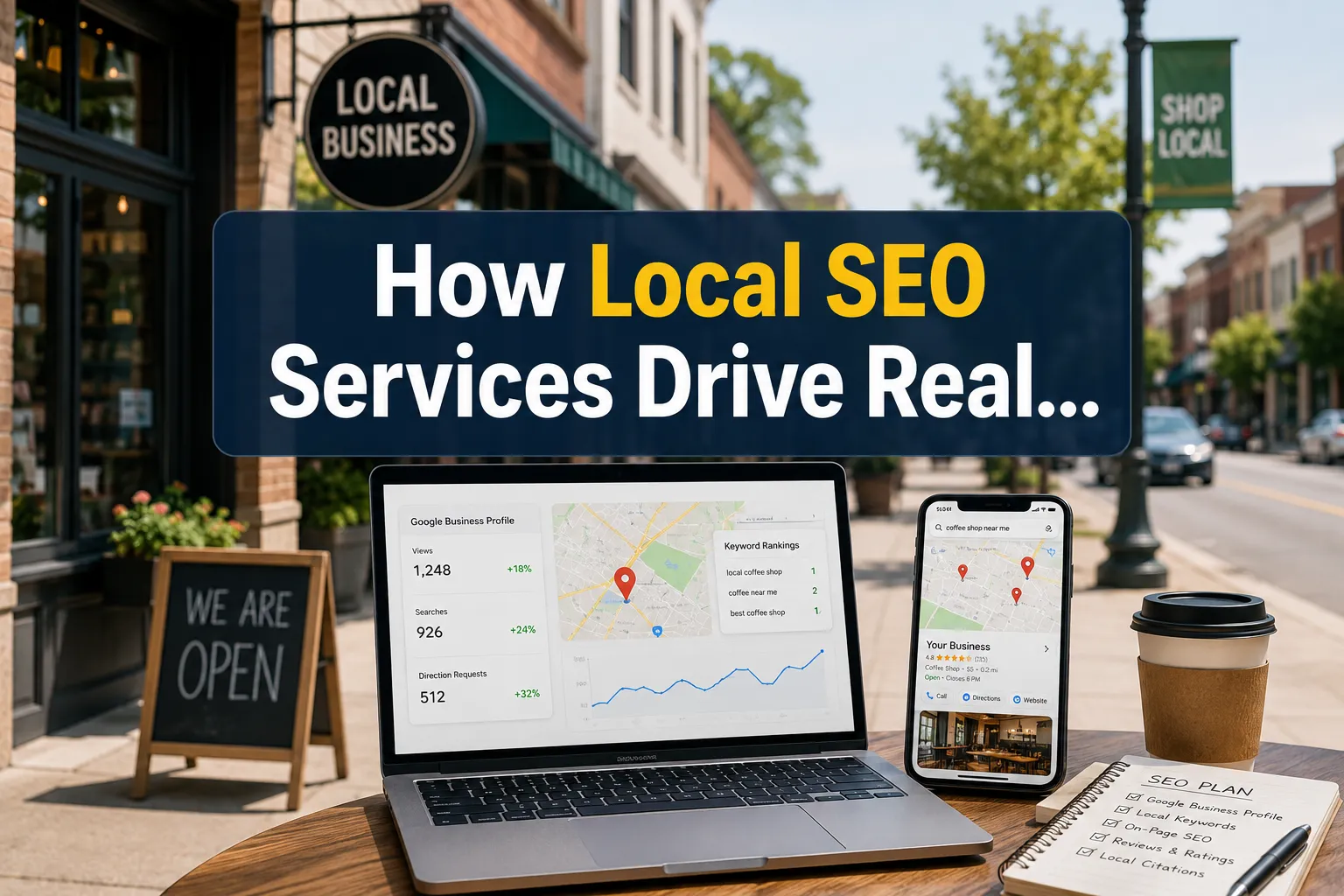
For
Want the complete picture? This guide is part of our Small Business Marketing ROI master guide, which shows you how paid and organic channels work together.
Sixty-six percent of all Google searches have local intent, meaning nearly half of every query typed into the world’s most powerful search engine is someone looking for a business, product, or service nearby. Yet the majority of small and mid-sized businesses still treat local search as an afterthought. That gap between consumer behavior and business investment is exactly where local SEO services create their most dramatic results.
Whether a business operates a single neighborhood bakery or manages a regional chain of service centers, local SEO services determine whether that business appears when nearby customers are ready to buy. This guide breaks down exactly how these services work, what they include, and how to choose and implement them for maximum impact.
Key Takeaways
- Local SEO services optimize a business’s online presence so it appears in geographically relevant search results, particularly Google’s Local Pack.
- A complete local SEO strategy covers Google Business Profile optimization, citation building, on-page signals, review management, and local link acquisition.
- Consistent NAP (Name, Address, Phone) data across all directories is foundational, errors here undermine every other effort.
- Businesses that invest in local SEO services typically see measurable improvements in phone calls, direction requests, and in-store visits within three to six months.
- Choosing the right provider requires evaluating their reporting transparency, local market knowledge, and track record with similar business types.
What Local SEO Services Actually Are, and Why They Matter
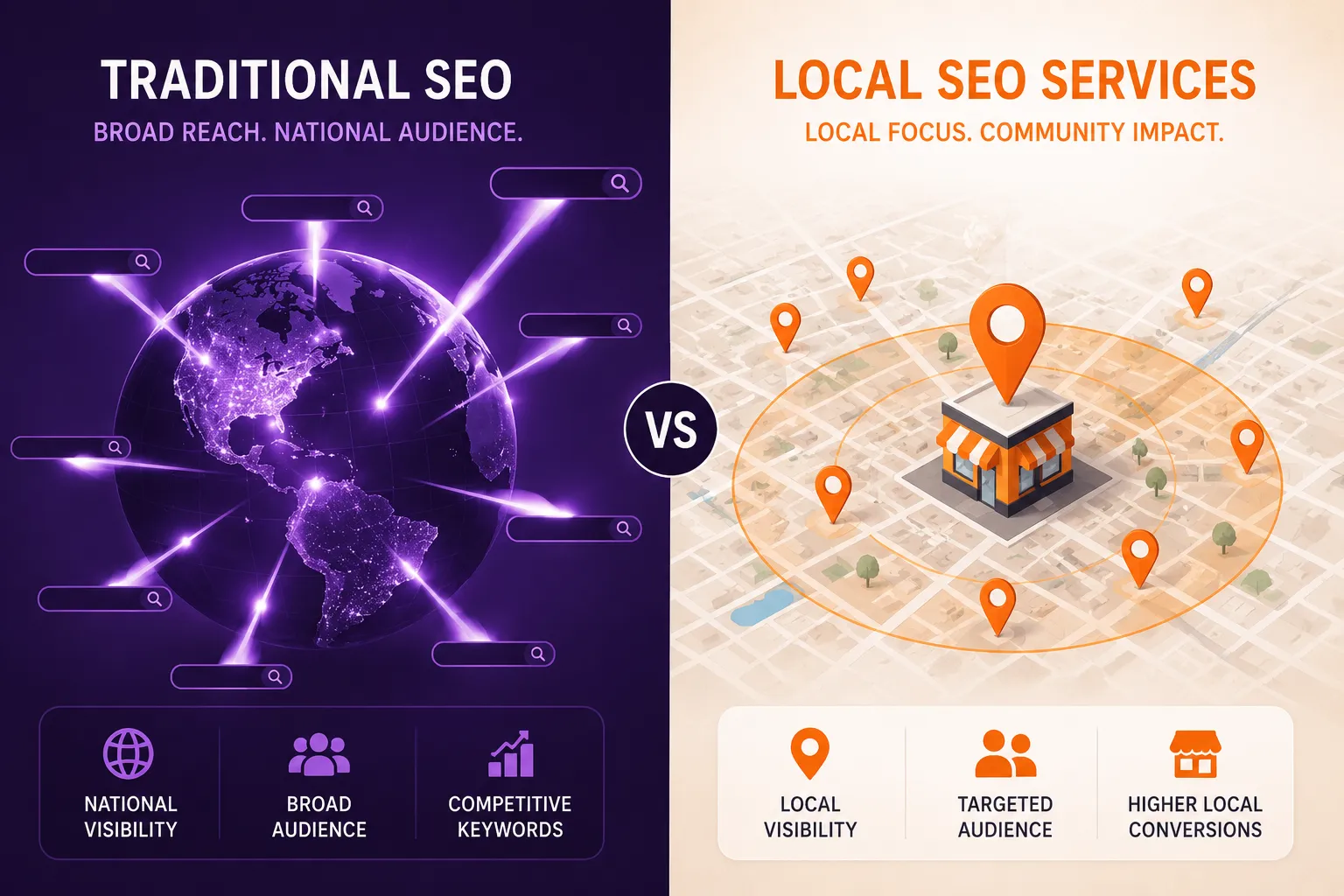
Local SEO services are a specialized category of search engine optimization focused on improving a business’s visibility in location-based search results. Unlike traditional SEO, which targets broad national or global audiences, local SEO zeroes in on the geographic area a business actually serves.
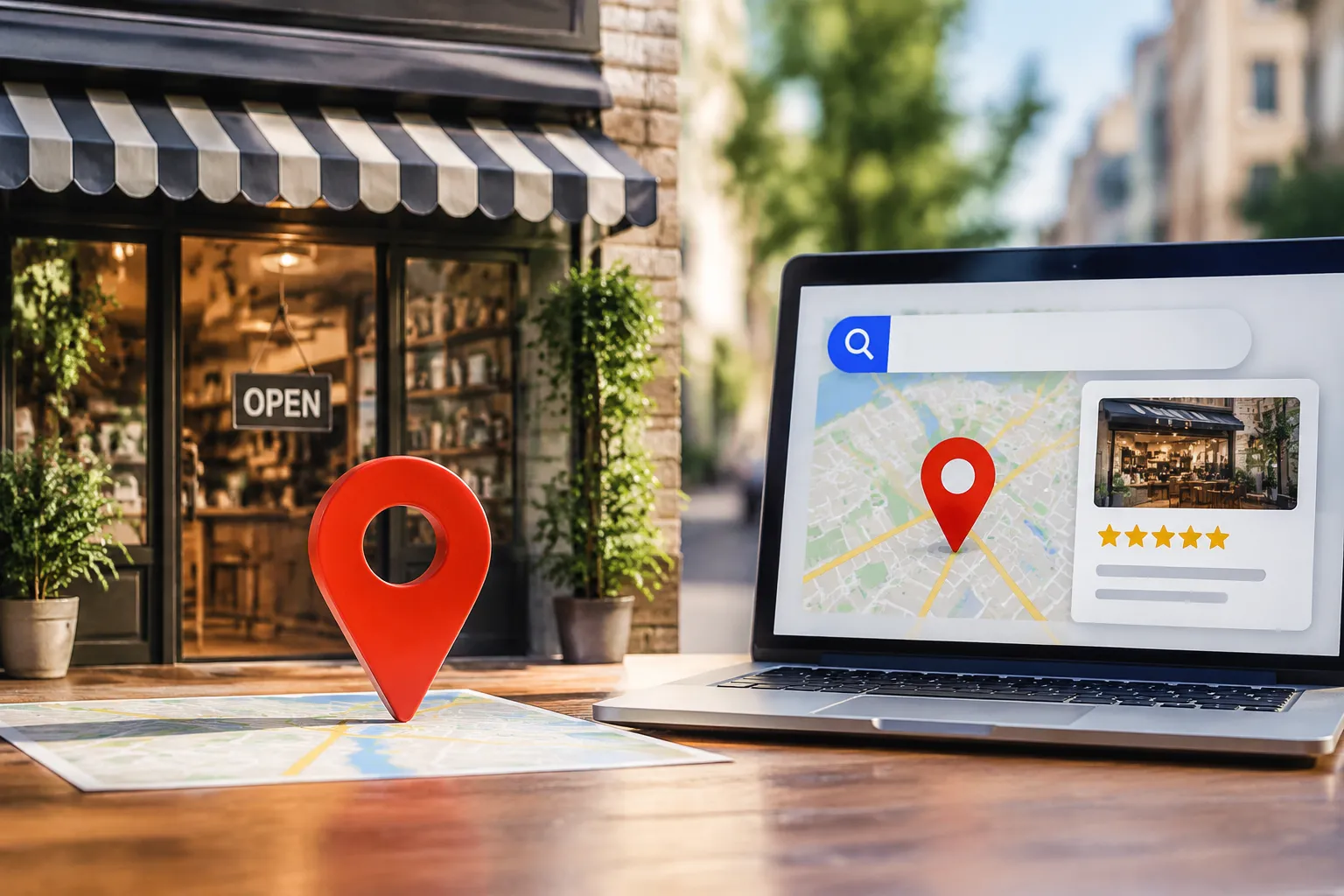
The primary battleground is Google’s Local Pack, the map-based block of three business listings that appears at the top of search results for queries like “plumber near me” or “best Italian restaurant in Austin.” Appearing in that pack is not accidental. It is the direct result of deliberate, ongoing optimization work.
The Three Pillars of Local Search Ranking
Google’s local ranking algorithm weighs three core factors:
- Relevance, How well a business listing matches what the searcher is looking for.
- Distance, How close the business is to the searcher’s location or the location mentioned in the query.
- Prominence, How well-known and authoritative the business is, based on links, reviews, citations, and overall online presence.
Local SEO services address all three pillars simultaneously. A provider that only handles one, say, citation building, without touching on-page content or review strategy is leaving significant ranking potential on the table.
Who Needs Local SEO Services
Any business that serves customers in a defined geographic area benefits from local search optimization. This includes:
- Brick-and-mortar retailers and restaurants
- Home service businesses (plumbers, electricians, landscapers)
- Medical and dental practices
- Law firms and financial advisors
- Real estate agencies
- Auto repair shops and dealerships
Even businesses without a physical storefront, such as mobile services or contractors who travel to clients, can and should use local SEO services, as Google allows service-area businesses to appear in local results without displaying a public address.
The Core Components of Effective Local SEO Services
Understanding what a comprehensive local SEO package actually includes helps businesses evaluate providers and hold them accountable. The following components are non-negotiable for any serious local search strategy.
Google Business Profile Optimization
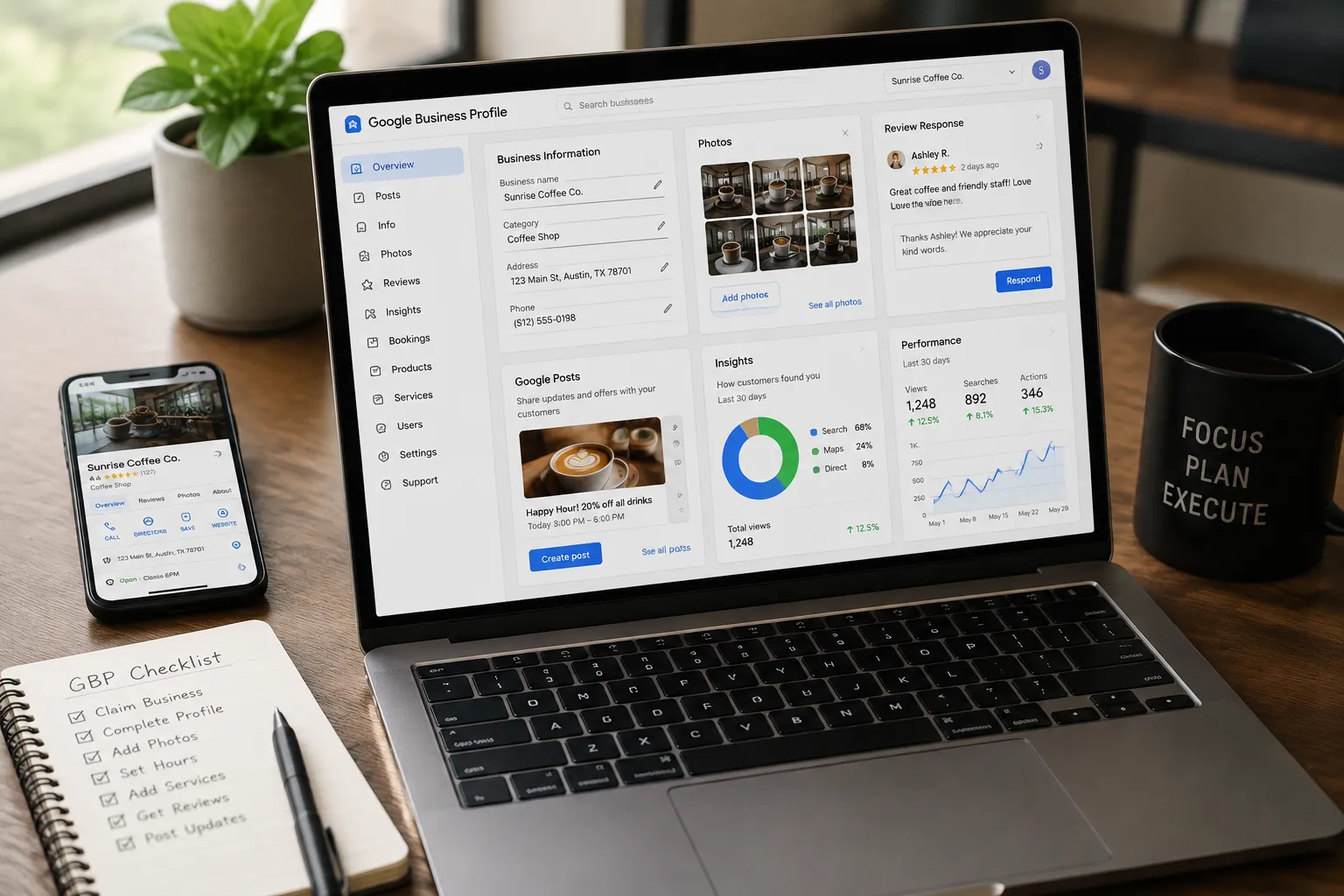
The Google Business Profile (GBP), formerly Google My Business, is the single most influential asset in local SEO. A fully optimized GBP listing includes:
- Accurate business name, address, and phone number (NAP)
- Correct primary and secondary categories
- Complete business hours, including holiday hours
- High-quality photos updated regularly
- A compelling business description with natural keyword integration
- Products or services listed with descriptions
- Regular Google Posts (updates, offers, events)
- Q&A section actively managed
“An incomplete or unverified Google Business Profile is the equivalent of a closed sign on your front door, customers cannot find you even when they are looking.”
Businesses that treat their GBP as a set-it-and-forget-it listing consistently underperform against competitors who treat it as a living, active marketing channel.
NAP Consistency and Citation Building
Citations are online mentions of a business’s name, address, and phone number across directories, review platforms, and data aggregators. Common citation sources include:
| Citation Type | Examples |
|---|---|
| General directories | Yelp, Yellow Pages, Foursquare |
| Data aggregators | Data Axle, Neustar Localeze, Foursquare |
| Industry-specific | Healthgrades (medical), Avvo (legal), Houzz (home services) |
| Local directories | Chamber of commerce sites, city business directories |
Inconsistent NAP data, even small variations like “St.” vs. “Street”, confuses search engines and erodes trust signals. A foundational task in any local SEO engagement is auditing existing citations, correcting errors, and building new listings on authoritative platforms.
On-Page Local SEO Signals
The business website itself must send strong geographic signals. Key on-page elements include:
- Location pages, Dedicated pages for each service area or physical location, with unique content (not duplicated across pages)
- Local schema markup, Structured data (LocalBusiness schema) that tells search engines exactly what the business is, where it operates, and how to contact it
- Localized title tags and meta descriptions, Incorporating city or neighborhood names naturally
- Embedded Google Map, Placed on the contact page
- Locally relevant content, Blog posts, FAQs, and service pages that reference local landmarks, neighborhoods, or community events
Review Generation and Management
Online reviews are both a ranking factor and a conversion driver. Businesses with a higher volume of recent, positive reviews consistently outrank those with sparse or outdated feedback.
Effective local SEO services include a systematic review strategy:
- Requesting reviews, Automated follow-up emails or SMS messages sent after a service interaction
- Responding to reviews, Both positive and negative, professionally and promptly
- Monitoring review platforms, Google, Yelp, Facebook, and industry-specific sites
- Flagging policy violations, Identifying and reporting fake or defamatory reviews
A business that generates five new Google reviews per month will, over a year, build a significant authority advantage over a competitor with stagnant review counts.
Local Link Building
Backlinks from locally relevant, authoritative websites signal prominence to Google. Effective local link-building tactics include:
- Sponsoring local events or charities and earning a link from their website
- Partnering with complementary local businesses for resource pages
- Earning coverage in local news outlets or community blogs
- Joining the local chamber of commerce (which typically includes a directory link)
- Guest posting on locally focused websites
Local links are often easier to acquire than national ones because the competition is lower and the relationship-building is more direct.
How to Choose and Implement Local SEO Services
With dozens of agencies and freelancers offering local SEO services, the selection process requires careful evaluation. The wrong provider wastes budget and can cause lasting damage through spammy tactics.
Red Flags to Avoid
Before signing any contract, watch for these warning signs:
- Guaranteed rankings, No ethical provider can guarantee a specific position on Google. Algorithm updates, competitor activity, and dozens of other variables make guarantees meaningless.
- Lack of transparency, Providers who cannot clearly explain what they do each month are often doing very little.
- Cheap bulk citation packages, Mass-submitting to hundreds of low-quality directories can trigger spam filters rather than improve rankings.
- Black-hat review tactics, Buying reviews or incentivizing customers to leave positive feedback violates Google’s policies and risks account suspension.
What to Look for in a Provider
The best local SEO services providers share several qualities:
- Clear reporting cadence, Monthly reports that show keyword ranking changes, GBP insights (calls, direction requests, website clicks), and citation audit results
- Local market knowledge, Familiarity with the specific city or region, including local competitors and community dynamics
- Proven case studies, Documented results for businesses in similar industries and geographic markets
- Communication standards, A dedicated point of contact and defined response times
- Ethical methodology, Adherence to Google’s Webmaster Guidelines at every step
Building an Internal Local SEO Foundation
Businesses that supplement professional local SEO services with internal best practices accelerate results significantly. Key internal actions include:
Claim and verify all listings. Even if an agency manages the GBP, the business owner should have verified ownership of the account.
Train staff on review requests. The most effective review generation happens at the point of service, when a satisfied customer is still in the building or just off the phone.
Keep business information updated. Holiday hours, new locations, phone number changes, and service updates must be reflected immediately across all platforms.
Create locally relevant content consistently. A blog post about a community event, a neighborhood guide, or a local case study builds both relevance and links over time.
Setting Realistic Expectations and Timelines
Local SEO is not a one-time fix. It is an ongoing process that compounds over time. A realistic timeline looks like this:
- Months 1-2: Audit, GBP optimization, NAP correction, foundational citation building
- Months 3-4: On-page optimization, review strategy implementation, initial link outreach
- Months 5-6: Measurable improvement in Local Pack appearances and organic local rankings
- Months 6-12: Sustained ranking improvements, increased call volume, and growing review count
Businesses in highly competitive markets (multiple established competitors with strong review profiles and authoritative websites) may need six to twelve months before seeing significant ranking shifts.
Measuring the ROI of Local SEO Services
Tracking return on investment from local search optimization requires looking beyond keyword rankings. The metrics that matter most for local businesses are:
Google Business Profile Insights:
- Phone calls from GBP listing
- Direction requests
- Website clicks from GBP
- Photo views and search queries
Website Analytics:
- Organic traffic from local search queries
- Conversion rate on location pages
- Time on page for locally targeted content
Revenue Metrics:
- In-store foot traffic (tracked via coupon codes or customer surveys)
- New customer acquisition source (ask new customers how they found the business)
- Revenue attributed to local search leads
A well-executed local SEO strategy typically delivers a cost-per-lead that is significantly lower than paid search advertising over a 12-month horizon, because organic rankings, once established, do not require per-click spend to maintain.
Frequently Asked Questions About Local SEO Services
How long does it take to see results from local SEO services?
Most businesses begin to see measurable improvements, such as higher GBP ranking positions and increased call volume, within three to six months of consistent optimization. Highly competitive markets may take longer. Results compound over time, so the longer a strategy is maintained, the stronger the outcomes.
How much do local SEO services typically cost?
Pricing varies widely based on market competitiveness, the number of locations, and the scope of services. Small businesses in mid-sized markets often work with providers in the range of a few hundred to a few thousand dollars per month. Larger multi-location brands may invest significantly more. The key is evaluating cost against measurable outcomes, not comparing raw price points.
Can a business do local SEO without hiring an agency?
Yes, particularly for businesses in less competitive markets. The core tasks, optimizing the GBP, building citations on major platforms, requesting reviews, and adding local schema to the website, can be learned and executed in-house. However, agencies bring efficiency, tools, and expertise that typically accelerate results and free the business owner to focus on operations.
What is the difference between local SEO and regular SEO?
Regular (or national) SEO targets broad keyword rankings without geographic specificity. Local SEO focuses specifically on appearing in location-based searches and the Google Local Pack. Local SEO relies heavily on GBP optimization, citations, and reviews, elements that are largely irrelevant to national SEO campaigns.
Does social media activity affect local SEO rankings?
Social media is not a direct ranking factor in Google’s local algorithm. However, active social profiles can drive brand searches, generate traffic to location pages, and create opportunities for local link acquisition, all of which indirectly support local search performance.
What happens if a competitor is using fake reviews or spam tactics?
Google provides a mechanism to report policy violations through the GBP dashboard and the Google Business Redressal Complaint Form. Documenting and reporting suspected spam is a legitimate and recommended competitive strategy. Focusing on building a genuine, high-volume review profile also creates a durable advantage that spam tactics cannot easily replicate.
Conclusion
Local SEO services represent one of the highest-return investments available to any business that depends on customers within a defined geographic area. The mechanics are clear: optimize the Google Business Profile, build consistent citations, generate authentic reviews, strengthen on-page local signals, and earn locally relevant backlinks. Execute these steps consistently over time, and the result is a compounding presence in local search that drives real foot traffic, phone calls, and revenue.
Actionable next steps for 2026:
- Audit the Google Business Profile today, verify it is claimed, fully completed, and has recent photos and posts.
- Run a NAP consistency check using a tool like BrightLocal or Whitespark to identify and correct citation errors.
- Implement a systematic review request process, even a simple follow-up text message after service completion can dramatically increase review volume within 90 days.
- Add LocalBusiness schema markup to the website’s contact page and all location pages.
- Evaluate current local SEO service providers (or the absence of one) against the criteria outlined in this guide, and make a decision based on transparency, local knowledge, and documented results.
The businesses that dominate local search in 2026 are not doing so by accident. They made a deliberate, sustained commitment to local SEO services, and the search results are simply reflecting that investment back to them.