Last updated: August 10, 2026
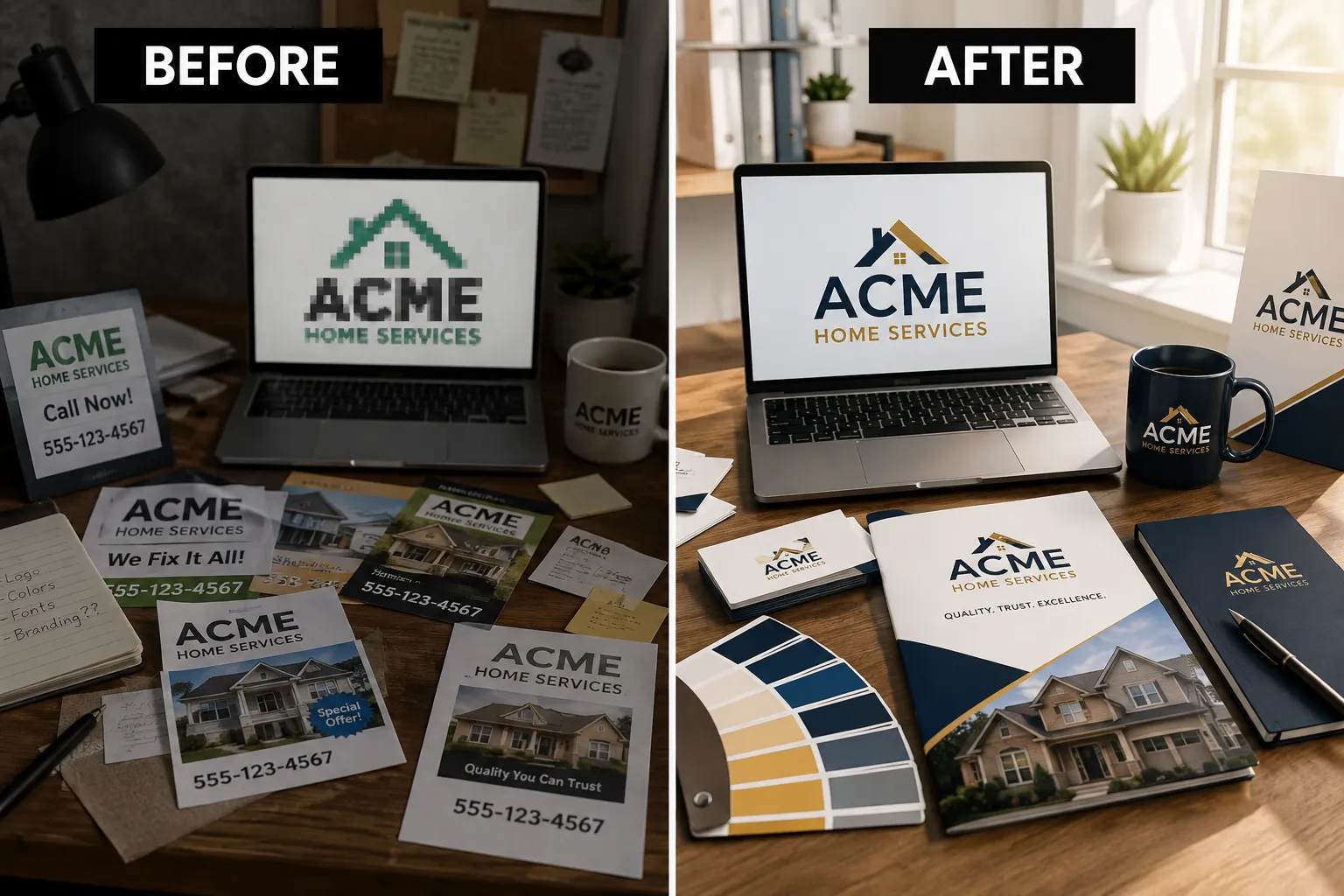
Quick Answer: Small businesses and startups can get professional branding without agency pricing by preparing a mood board, writing a clear design brief, and choosing to hire a freelance graphic designer for high-impact assets like a logo and brand identity kit. Prioritize the visual elements that show up most often in front of customers, and use DIY tools for everything else until revenue supports a larger investment.
Key Takeaways
- A professional logo and a defined color palette are the two most important branding assets to outsource first.
- A mood board and written design brief dramatically reduce revision rounds and keep freelance costs down.
- Freelance designers typically cost far less than agencies and offer comparable quality for defined, scoped projects.
- Portfolio-first freelance channels let founders review real work samples before committing to a designer.
- A basic brand identity for a small business can be completed professionally for $300 to $1,500 depending on scope and designer experience.
- DIY design tools work well for templated social media content once a professional brand system is in place.
- Always request source files (AI, EPS, or SVG) and a brand style guide as part of any logo or identity project.
- Clear written feedback, not vague adjectives, is the fastest way to get revisions right the first time.

What Graphic Design Files Does a Startup Actually Need?
Start with the assets that appear in front of customers every day. Everything else can wait.
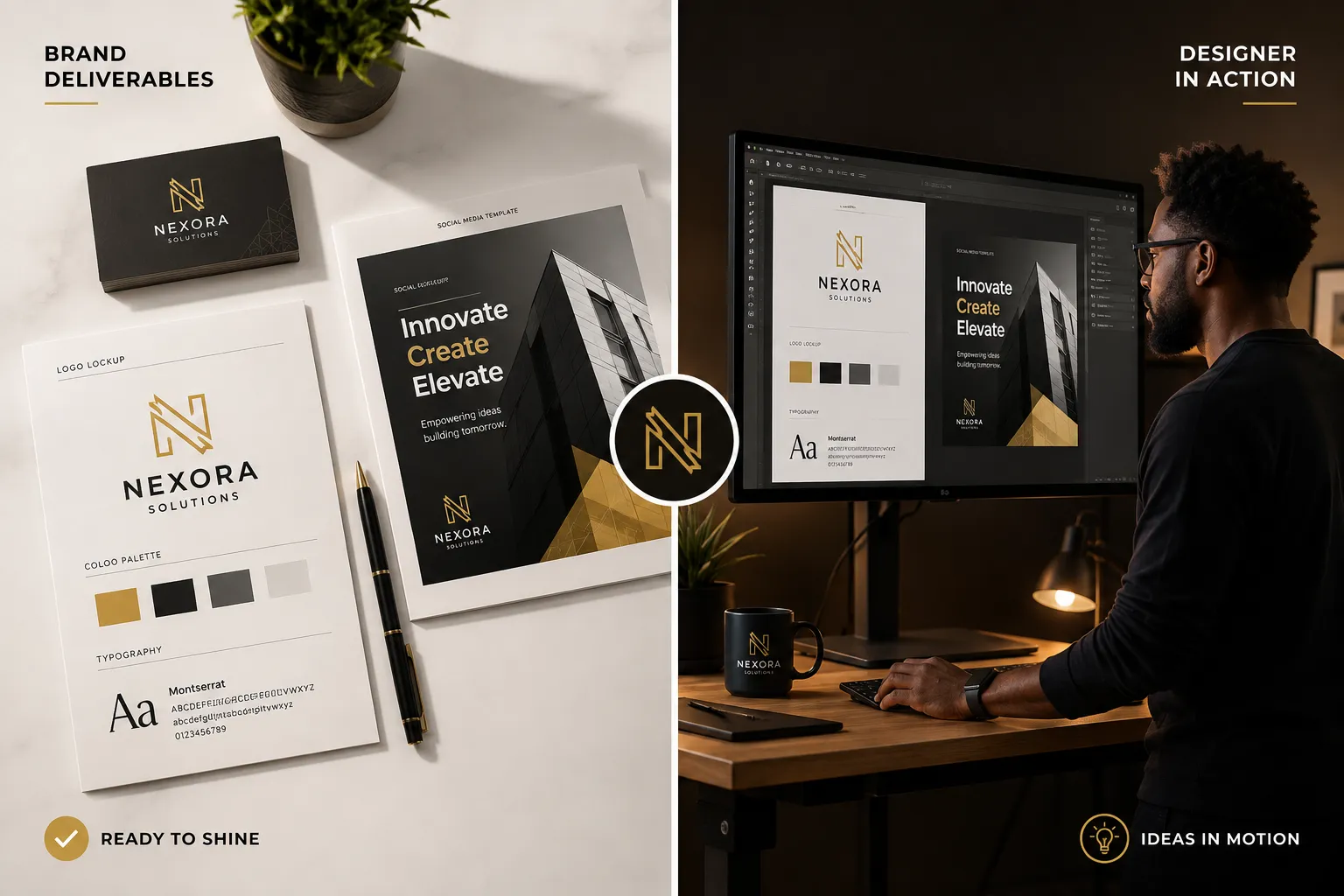
For most early-stage businesses, the essential design deliverables are:
- Primary logo (horizontal and stacked versions)
- Brand color palette (3 to 5 hex codes with usage rules)
- Typography pairing (one heading font, one body font)
- Favicon and app icon (if you have a website or app)
- Business card or email signature layout
- Two or three social media post templates
- One-page pitch deck slide template (for founders raising capital)
A full brand identity for a small business does not need to include every possible touchpoint on day one. Scope your first design project to the assets you will use within the next 90 days. You can commission additional materials, such as brochures or packaging, once the core identity is locked.
Common mistake: Founders often ask for too much in a single project. A bloated scope raises costs, slows timelines, and makes it harder for the designer to maintain visual consistency.
How Do I Create a Mood Board for My Brand?
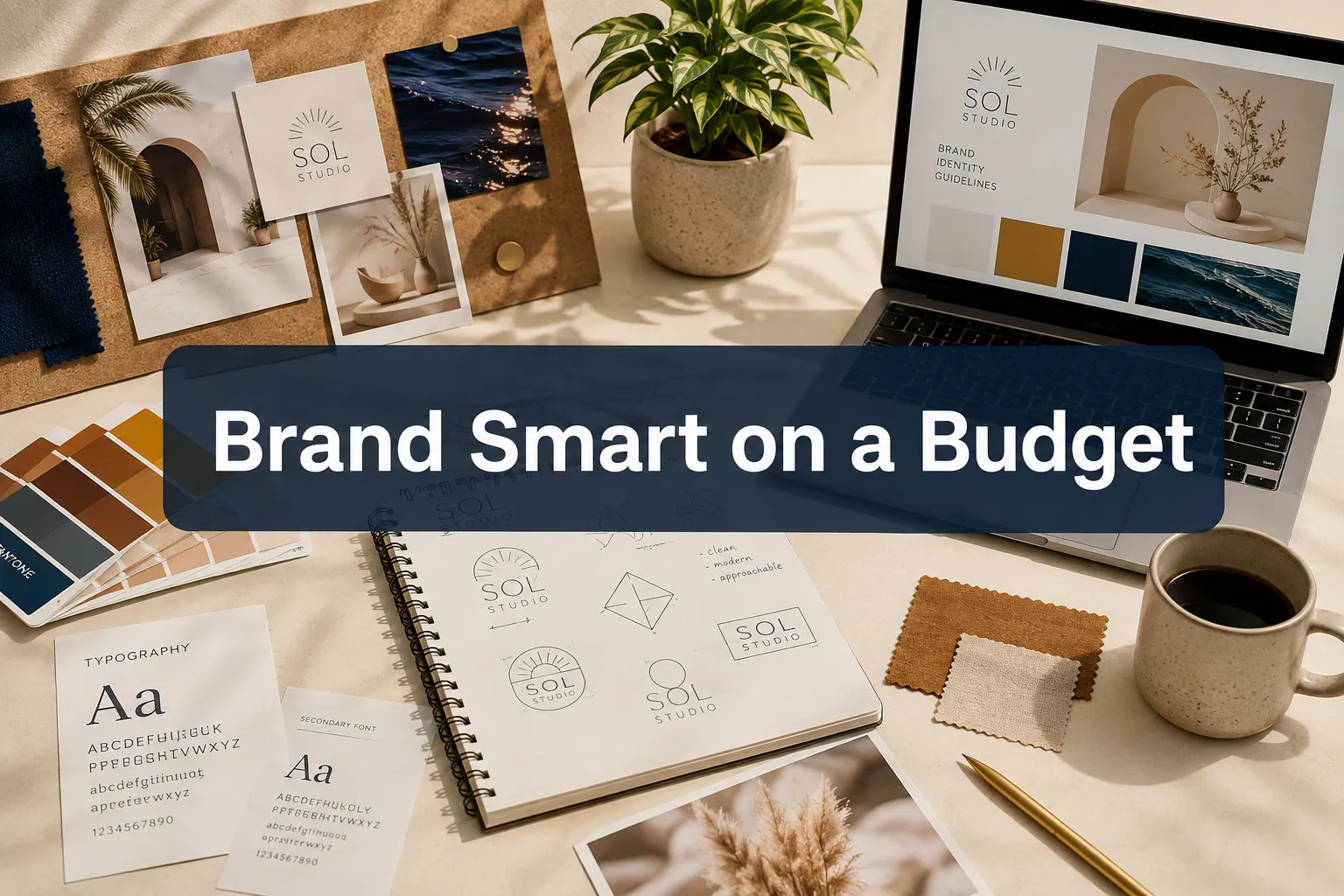
A mood board is a visual collection of images, colors, fonts, and design styles that communicates the feeling you want your brand to convey. It is the single most useful document you can hand a freelance designer before work begins.
Step-by-step process:
- Collect 15 to 25 reference images. Pull from visual research boards, portfolio examples, search results, and competitor websites. Include logos, packaging, websites, and editorial photography that match the aesthetic you want.
- Identify patterns. Notice which colors, textures, and typographic styles appear repeatedly in your selections. Those patterns reveal your instinctive brand direction.
- Add direct competitor examples. Include two or three brands you admire in your industry, and two or three you want to look nothing like. Label them clearly.
- Include font examples. Screenshot typefaces you find appealing, even from unrelated brands. Designers can identify font families from screenshots.
- Assemble in a simple PDF or mood-board document. Grid layout works fine. Annotate each image with one or two words: “clean,” “bold,” “approachable,” “premium.”
A mood board does not need to be polished. Its job is to align your mental image with the designer’s interpretation before a single concept is sketched.
What Should I Include in a Design Brief for a Freelance Graphic Designer?
A design brief is a written document that defines the project scope, audience, goals, and constraints. Designers use it to make decisions independently, which means fewer back-and-forth emails and fewer billable revision rounds.
A strong design brief includes:
| Section | What to Write |
|---|---|
| Business overview | What you do, who you serve, and your market position |
| Brand personality | Three to five adjectives (e.g., “trustworthy, modern, approachable”) |
| Target audience | Age, profession, values, and buying behavior of your ideal customer |
| Competitors | Two to three direct competitors and what differentiates you |
| Deliverables | Exact list of files needed (logo, color palette, templates, etc.) |
| File formats | AI, EPS, SVG, PNG, PDF, specify what you need and why |
| Timeline | Project start date, review milestone, and final delivery date |
| Budget | Your maximum spend, stated clearly |
| Mood board | Attached or linked |
The brief does not need to be long. One to two pages is ideal. A concise, specific brief signals to a designer that you are an organized client, which often results in better proposals and more accurate quotes.
How Much Does It Cost to Hire a Freelance Graphic Designer?
Freelance graphic design rates vary by experience level, location, and project scope. The figures below are general estimates based on market data commonly reported across freelance platforms as of 2026.
- Entry-level designer (0 to 2 years): $150 to $400 for a logo package
- Mid-level designer (3 to 6 years): $400 to $1,200 for a logo and basic brand identity kit
- Senior or specialized designer (7+ years): $1,200 to $3,500+ for a comprehensive brand identity system
For a startup working with a tight budget, a mid-level freelancer with a strong portfolio in your industry is usually the best value. Entry-level designers carry more risk of multiple revisions and inconsistent output.
Can you get professional branding under $500? Yes, but scope must be limited. A single logo with two color variations, a hex color palette, and a font recommendation is achievable at this price point with a competent mid-junior designer. Do not expect a full brand identity system, brand guidelines document, and multiple asset formats for under $500.
What Is the Difference Between Hiring a Freelancer vs. a Design Agency?
For most small businesses and startups, a freelance designer offers better value than a full-service agency at the early stage.
Freelancer advantages:
- Lower overhead means lower rates
- Direct communication with the person doing the work
- Flexible scope and payment terms
- Faster turnaround on focused projects
Agency advantages:
- Team-based approach handles strategy, copywriting, and design together
- Better suited for complex, multi-channel brand launches
- Stronger accountability structures for large budgets
Choose a freelancer if your budget is under $5,000, your project is well-defined (logo, brand kit, a few templates), and you can provide clear direction through a brief and mood board.
Choose an agency if you are launching a funded product, need brand strategy alongside design, or require simultaneous deliverables across multiple channels.
Most founders who need to outsource graphic design at the startup stage are better served by a skilled freelancer than a boutique agency charging three to five times more for the same visual output.
How to Find and Vet a Good Freelance Graphic Designer
Finding the right designer takes about two to four hours of focused research. Rushing this step is the most expensive mistake a founder can make.
Where to look:
- Portfolio directories, where designers showcase real work; filter by industry or style
- Freelance work platforms, useful for reviewing work history, client feedback, and hourly rates in one place
- Curated freelance networks, which often have higher average quality and corresponding rates
- LinkedIn, useful for finding designers with specific industry experience
How to vet before hiring:
- Review at least 10 to 15 pieces from their portfolio. Look for consistency in quality, not just one standout piece.
- Check whether their style matches your mood board. A designer who excels at playful consumer brands may not be the right fit for a B2B SaaS company.
- Send a short message describing your project. Evaluate how clearly and promptly they respond. Communication quality predicts the working relationship.
- Ask for one or two client references if the budget exceeds $800.
- Start with a small paid test project (an icon or one social template) before committing to a full brand identity engagement.
Should I Prioritize a Logo or Website Design First?
Start with the logo and brand identity system before touching the website.
A website built before a brand identity is defined will likely need visual overhaul within six months. The logo, color palette, and typography inform every design decision on the site: button colors, heading styles, image tone, and layout mood. Building the site first is like painting a room before choosing the furniture.
Recommended sequence for early-stage startups:
- Logo and primary brand mark
- Color palette and typography system
- Brand style guide (even a one-page version)
- Website design (using the brand system as the foundation)
- Social media templates
- Pitch deck cleanup
- Printed or digital marketing materials
This sequence means every downstream asset reinforces the same visual identity rather than pulling in different directions.
How Long Does It Take a Freelancer to Design a Logo?
A professional logo project with a qualified freelancer typically takes 7 to 21 business days from project kickoff to final file delivery.
The timeline breaks down roughly as follows:
- Discovery and brief review: 1 to 2 days
- Initial concepts presented: 3 to 5 business days
- Client feedback and revisions: 2 to 4 rounds over 5 to 10 days
- Final files and brand guide delivery: 1 to 2 days
Timelines stretch when clients take more than 48 hours to respond to revision requests or change the direction mid-project. Providing a complete brief and mood board before work begins is the most reliable way to compress the timeline.
When Should I Hire a Designer vs. Use a DIY Tool Like DIY design tools?
Use a DIY tool for templated, recurring content. Hire a freelance graphic designer for foundational brand assets that define how your business looks to the world.
DIY tools work well for:
- Weekly social media posts using a locked template
- Internal documents and presentations
- Email newsletter layouts
- Simple promotional graphics based on an existing brand system
Hire a professional for:
- Logo and primary brand mark creation
- Brand identity system development
- Pitch decks that will be seen by investors
- Packaging or print materials where production quality matters
- Any asset where amateur execution would undermine credibility
The practical rule: if a customer, investor, or partner will judge your business by the quality of the design, hire a professional. If the asset is internal or based on a template a designer already built, DIY is fine.
Common Mistakes When Hiring a Freelance Designer
1. Skipping the brief. Telling a designer “make it look professional” without a written brief guarantees misalignment and wasted revision rounds.
2. Choosing on price alone. The cheapest quote often costs more in the end due to poor communication, missed files, and unusable deliverables.
3. Not requesting source files. Always ask for native design files (AI, EPS, or Figma source) in addition to PNG and PDF exports. Without source files, every future update requires hiring someone new to recreate the work from scratch.
4. Approving concepts too quickly. Review initial concepts against your brief and mood board before providing feedback. Gut reactions lead to direction changes mid-project, which extend timelines and budgets.
5. Ignoring the contract. Even a simple one-page agreement covering deliverables, revision rounds, payment schedule, and file ownership protects both parties.
How to Communicate Design Feedback to a Freelancer Effectively
Specific, referenced feedback gets better results than emotional or vague reactions.
Instead of: “I don’t like it, it feels off.”
Say: “The logo feels too formal for our audience. Based on the mood board reference on slide 3, I was expecting something with more open spacing and a lighter weight typeface.”
Feedback framework:
- Reference the brief or mood board when explaining what is missing
- Separate what is working from what needs to change
- Prioritize feedback by importance (structural issues first, color tweaks last)
- Consolidate all feedback in one message rather than sending multiple rounds of small notes
Most freelance contracts include two to three revision rounds. Using them efficiently keeps the project on time and on budget.
What If I Am Not Happy with the Freelancer’s Design Work?
Address concerns early, in writing, and with specific references to the original brief.
If the first concepts miss the mark significantly, that is usually a brief or communication problem, not a talent problem. Review whether the brief was specific enough and whether the mood board clearly communicated the desired direction.
Steps to take:
- Compare the delivered work against the written brief point by point.
- Write a structured feedback document identifying specific gaps.
- Request a revision round focused on the highest-priority misalignments.
- If after two revision rounds the work still does not meet the brief, discuss a partial refund or project cancellation based on the contract terms.
Prevention is more reliable than resolution. Thorough vetting, a strong brief, and a signed contract with clear deliverables eliminate most disputes before they start.
Startup Branding Checklist: What to Prepare Before You Hire
Use this checklist before reaching out to any freelance designer. Founders who complete these steps before the first conversation consistently report faster timelines and fewer surprises.
Before contacting a designer:
- Mood board assembled (15 to 25 reference images, annotated)
- Three to five brand personality adjectives defined
- Target audience described in one paragraph
- Two to three competitor brands identified
- Deliverables list finalized (logo, palette, templates, etc.)
- File format requirements noted (AI, SVG, PNG, PDF)
- Timeline established with a firm delivery date
- Budget range confirmed in writing
During the project:
- Design brief sent before kickoff call
- Revision feedback submitted in writing, consolidated
- Source files requested explicitly in the contract
- Interim milestones confirmed before final payment
After delivery:
- All source files downloaded and backed up
- Brand style guide saved in a shared folder
- Font licenses confirmed and purchased if needed
- Designer contact saved for future work
FAQ
How do I know if a freelance designer is legitimate?
Review their portfolio for consistency across multiple projects, not just one hero piece. Check for client testimonials or work history, testimonials, or credible portfolio proof. A legitimate designer will ask clarifying questions about your project before quoting, not immediately send a price list.
What is a brand style guide and do I need one?
A brand style guide is a document that specifies how your logo, colors, fonts, and visual elements should be used. Even a one-page version prevents inconsistency as your business grows and other people start creating materials on your behalf. Request one as part of any logo or brand identity project.
Can I use a logo from a marketplace like Creative Market or 99designs?
Marketplace logos are pre-made or crowd-sourced and may be sold to multiple buyers. They work as a temporary placeholder but are not a substitute for a custom professional logo design. If brand differentiation matters to your business, commission a custom logo.
How many revision rounds should a logo project include?
Two to three revision rounds is standard for a logo project. More than three rounds usually indicates a mismatch between the brief and the designer’s interpretation, or a client who has not clearly defined what they want. A strong brief reduces the need for revisions.
What is the cheapest way to get a brand identity designed?
The most affordable route to a legitimate brand identity for a small business is hiring a mid-junior freelance designer (two to four years of experience) through a platform like freelance marketplaces or portfolio sites, with a clearly scoped project limited to a logo, color palette, and one or two font recommendations. Expect to spend $300 to $600 for this scope with a competent designer.
Do I own the logo once the project is complete?
Ownership depends on the contract. Always include a clause that transfers full intellectual property rights to you upon final payment. Without this clause, the designer may retain rights to the work. This is a non-negotiable term for any brand asset you commission.
Conclusion
Professional branding is not reserved for companies with agency budgets. The founders who build the strongest visual identities at the startup stage are not the ones who spend the most; they are the ones who prepare the most. A clear mood board, a specific design brief, and a well-scoped deliverables list give a talented freelance designer everything they need to produce polished, consistent brand assets on the first pass.
Actionable next steps:
- Build your mood board this week using Pinterest or a DIY design tool. Aim for 20 images with brief annotations.
- Write a one-page design brief using the section outline above.
- Search portfolio directories for three to five designers whose portfolio style matches your mood board.
- Send each designer a short project description and ask for a quote based on your defined deliverables.
- Sign a simple contract that covers deliverables, revision rounds, timeline, and IP transfer before any work begins.
When you hire a freelance graphic designer with this level of preparation, you are not just buying a logo. You are building a brand system that will represent your business credibly at every customer touchpoint from day one.